


Hey there, fellow tool enthusiasts! As a supplier of Eletrical Tool Changers, I'm super excited to dive into the topic of what the lubrication method of these amazing tools is.
First things first, let's understand why lubrication is so crucial for Eletrical Tool Changers. These tools are constantly in motion, with various components moving and interacting with each other. Without proper lubrication, friction can build up, leading to wear and tear on the parts. This not only reduces the lifespan of the tool changer but can also affect its performance. You might start to notice slower tool changes, less precision, and even potential malfunctions. So, lubrication is like the life - blood of these electrical tool changers, keeping them running smoothly and efficiently.
Now, let's talk about the different lubrication methods available.
Grease Lubrication
Grease is one of the most common lubrication methods for Eletrical Tool Changers. It's a thick, semi - solid lubricant that adheres well to the surfaces it's applied to. One of the big advantages of grease is its ability to stay in place for a long time. It doesn't drip or run off easily, which is great for tool changers that are often in various orientations during operation.
When using grease for lubrication, you first need to identify the key areas where friction occurs. These typically include the moving parts such as the joints, gears, and slides. Before applying the grease, make sure to clean these areas thoroughly. Any dirt or debris can mix with the grease and actually cause more harm than good. You can use a clean cloth and a suitable solvent to remove any old grease or contaminants.
Once the parts are clean, apply a thin layer of grease. You don't want to over - do it because too much grease can attract more dirt and also cause the parts to become sluggish. A small amount spread evenly is usually sufficient. You can use a grease gun or a small brush to apply the grease precisely.
Grease has a good resistance to water and dust, which is beneficial for Eletrical Tool Changers that might be used in less - than - ideal environments. However, it does have some drawbacks. Over time, grease can break down and lose its lubricating properties, especially under high - temperature conditions. So, regular checks and re - application are necessary.
Oil Lubrication
Oil lubrication is another option for Eletrical Tool Changers. Unlike grease, oil is a liquid lubricant, which allows for better heat dissipation. This is particularly important for tool changers that generate a lot of heat during operation, such as those in high - speed machining applications.
There are different types of oils available, each with its own properties. For example, synthetic oils are often preferred because they offer better performance at extreme temperatures and have a longer service life. Mineral oils are more traditional and can also work well in many applications.
When lubricating with oil, you can use a few different methods. One common way is to use an oil mist system. This system sprays a fine mist of oil over the moving parts of the tool changer. The advantage of an oil mist system is that it can reach all the small, hard - to - reach areas. It also provides a more consistent lubrication because the oil is continuously distributed.
Another method is to use a drip oiler. This is a simple device that allows a small, controlled amount of oil to drip onto the parts that need lubrication. It's a more traditional approach and can be effective for smaller Eletrical Tool Changers or in applications where a constant and slow supply of oil is sufficient.
However, oil lubrication also has its challenges. Oil can leak more easily than grease, and it requires a proper containment system to prevent mess and contamination. Additionally, oil can attract dirt and contaminants more quickly, so regular filtration and replacement are necessary.

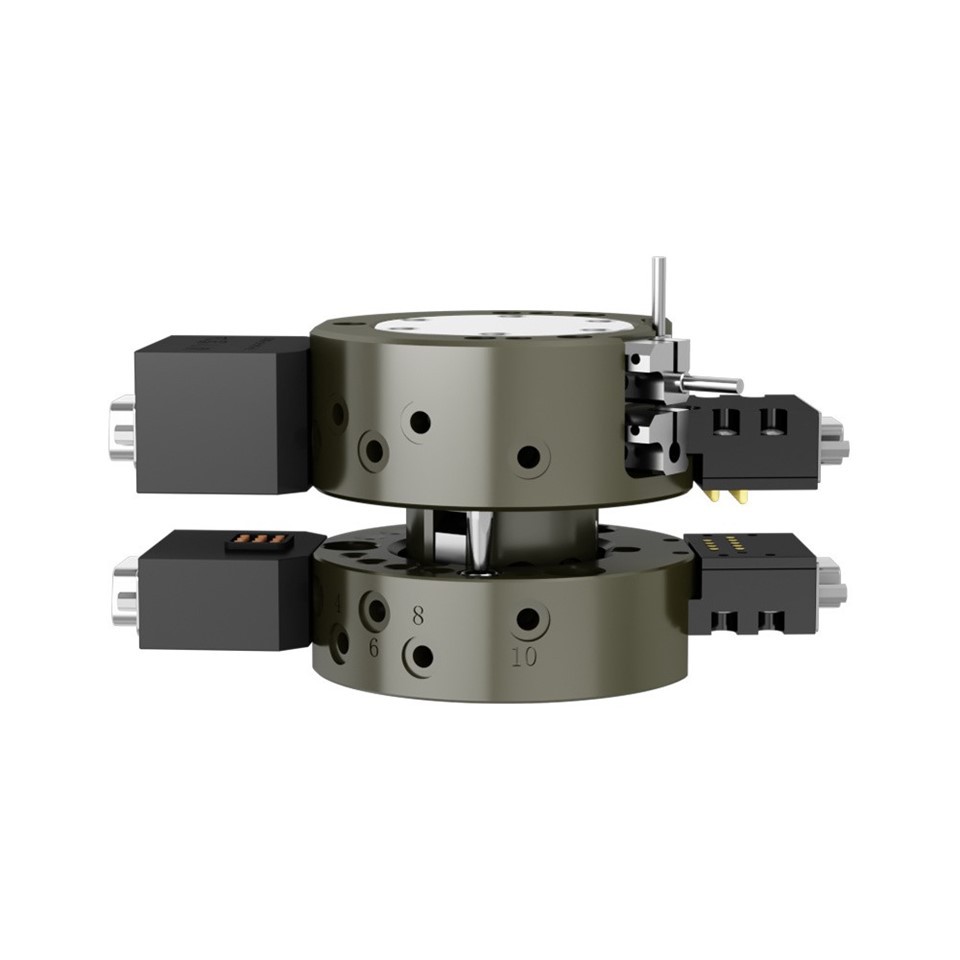
Hybrid Lubrication
Some Eletrical Tool Changers might benefit from a hybrid lubrication approach. This combines the advantages of both grease and oil lubrication. For example, you might use grease for the larger, more stationary parts that need long - lasting lubrication and oil for the high - speed moving components that require better heat dissipation.
Consider the Quick-change Module. In a quick - change module, you have some parts that move rapidly to swap tools, while other parts are more static. A hybrid lubrication method can be optimized to ensure that each part gets the best - suited lubrication for its specific function.
Choosing the Right Lubrication Method
So, how do you choose the right lubrication method for your Eletrical Tool Changer? Well, it depends on several factors.
The first factor is the operating environment. If the tool changer is used in a dirty or dusty environment, grease might be a better choice because of its resistance to contaminants. On the other hand, if it's used in a high - temperature or high - speed application, oil lubrication might be more suitable due to its better heat - dissipating properties.
The design of the tool changer also matters. Some tool changers are designed to work better with a particular type of lubrication. For example, if the tool changer has a lot of small, intricate parts, an oil mist system might be the best way to ensure that all the parts are properly lubricated.
Your maintenance schedule is another important consideration. Grease generally requires less frequent re - application compared to oil. However, if you have the time and resources to perform regular maintenance, oil lubrication can offer better long - term performance.
As a supplier of Eletrical Tool Changers, I've seen firsthand how the right lubrication method can make a huge difference in the performance and lifespan of these tools. Whether you're a small - scale workshop or a large - scale manufacturing plant, choosing the proper lubrication for your tool changers is essential.
If you're in the market for Eletrical Tool Changers or want to learn more about the best lubrication practices for your existing tools, don't hesitate to reach out. I'm here to help you make the right choices and ensure that your tool changers are operating at their best. Let's talk about how we can work together to meet your tool - changing needs and take your production efficiency to the next level.
References
- Machinery's Handbook: A comprehensive reference for all things related to mechanical engineering, including lubrication of industrial tools.
- Journal of Manufacturing Technology Management: Research articles on the latest advancements in tool changing technology and lubrication methods.
- ASME (American Society of Mechanical Engineers) publications: In - depth information on mechanical components and their maintenance, including lubrication of electrical tool changers.


