


Hey there! As a supplier of robotic grippers, I often get asked about how to test the quality of these nifty tools. In this blog, I'm gonna share some practical methods that you can use to ensure you're getting a top - notch robotic gripper.
First off, let's talk about the basics. A robotic gripper is a device attached to a robot arm, used to grasp and manipulate objects. The quality of a gripper can significantly impact the efficiency and reliability of your robotic operations. So, it's super important to test it properly.
1. Structural Integrity Test
The first thing you gotta check is the structural integrity of the gripper. You want to make sure it's built to last. Start by giving it a visual inspection. Look for any signs of cracks, loose parts, or poor welding. A well - made gripper should have a solid construction with no visible defects.
Next, try applying some gentle force to the gripper's moving parts. For example, if it's a Two - finger Parallel Mechanical Gripper, open and close the fingers a few times. They should move smoothly without any jerks or sticking. If you feel any resistance or hear strange noises, that could be a red flag.
You can also perform a load - bearing test. Hang a known weight from the gripper and see how it responds. The gripper should be able to hold the weight steadily without any signs of deformation or failure. However, make sure not to exceed the gripper's rated load capacity, as this could damage the gripper.
2. Precision and Repeatability Test
Precision is key when it comes to robotic grippers. You need to know that the gripper can accurately pick up and place objects in the right position every time. To test the precision, set up a simple target. It could be a small peg or a hole on a test board.
Have the gripper pick up an object and place it on the target multiple times. Measure the deviation from the target position each time. A high - quality gripper should have a very small deviation, indicating good precision.
Repeatability is related to precision. It refers to the gripper's ability to perform the same task consistently over time. Run the pick - and - place test at least 100 times and record the results. Calculate the standard deviation of the placement positions. A low standard deviation means the gripper has good repeatability.
3. Force and Torque Test
The gripping force of a robotic gripper is crucial, especially when handling delicate or heavy objects. You can use a force sensor to measure the gripping force. Place the sensor between the gripper's fingers and have the gripper close on it. The sensor will display the amount of force being applied.
Compare the measured force with the gripper's specified force rating. The actual force should be within an acceptable range of the rated force. If the force is too low, the gripper may not be able to hold objects securely. If it's too high, it could damage the objects.
In addition to gripping force, some grippers may also have a torque requirement, especially those used for rotating or twisting objects. You can use a torque wrench to measure the torque applied by the gripper. Make sure the measured torque matches the specifications.
4. Material Compatibility Test
If you're using the gripper to handle specific materials, it's important to test its compatibility. Different materials have different surface properties, such as smoothness, hardness, and friction coefficient.
For example, if you're going to use the gripper to pick up glass objects, test how well it can grip the glass. You may need to adjust the gripping force or use special gripper pads to increase the friction.
You can also test the gripper's resistance to corrosion if it will be used in a harsh environment. Expose the gripper to a corrosive agent (such as saltwater for a short period, following safety procedures) and check for any signs of corrosion or degradation.
5. Electrical and Control System Test
Many modern robotic grippers are electrically powered and controlled by a control system. Check the electrical connections first. Make sure all the wires are properly connected and there are no loose or frayed wires.
Power on the gripper and test its basic functions using the control system. Try to open, close, and adjust the gripping force through the control interface. The gripper should respond accurately to your commands.
You can also perform a communication test if the gripper is connected to a robot controller. Send different commands from the controller and see if the gripper executes them correctly. Check for any communication errors or delays.
6. Speed and Response Time Test
The speed at which the gripper can open and close is an important factor, especially in high - speed production lines. Use a stopwatch to measure the time it takes for the gripper to fully open and close. Compare this time with the gripper's specified speed.
The response time is also crucial. It refers to the time it takes for the gripper to start moving after receiving a command. You can use an oscilloscope or a high - speed camera to measure the response time. A fast response time means the gripper can quickly adapt to changes in the production process.
7. Durability and Long - term Performance Test
To really know the quality of a gripper, you need to test its durability over a long period. Run the gripper through a continuous cycle of pick - and - place operations for several hours or even days.
Monitor the gripper's performance during this test. Check for any signs of wear and tear, such as worn - out gripper pads or damaged gears. Keep track of the number of cycles the gripper can complete before any significant performance degradation occurs.
If possible, perform the durability test under different operating conditions, such as different temperatures and humidity levels. This will give you a better understanding of how the gripper will perform in real - world applications.
Conclusion
Testing the quality of a robotic gripper is a comprehensive process that involves multiple aspects. By performing these tests, you can ensure that you're getting a reliable and high - performance gripper.
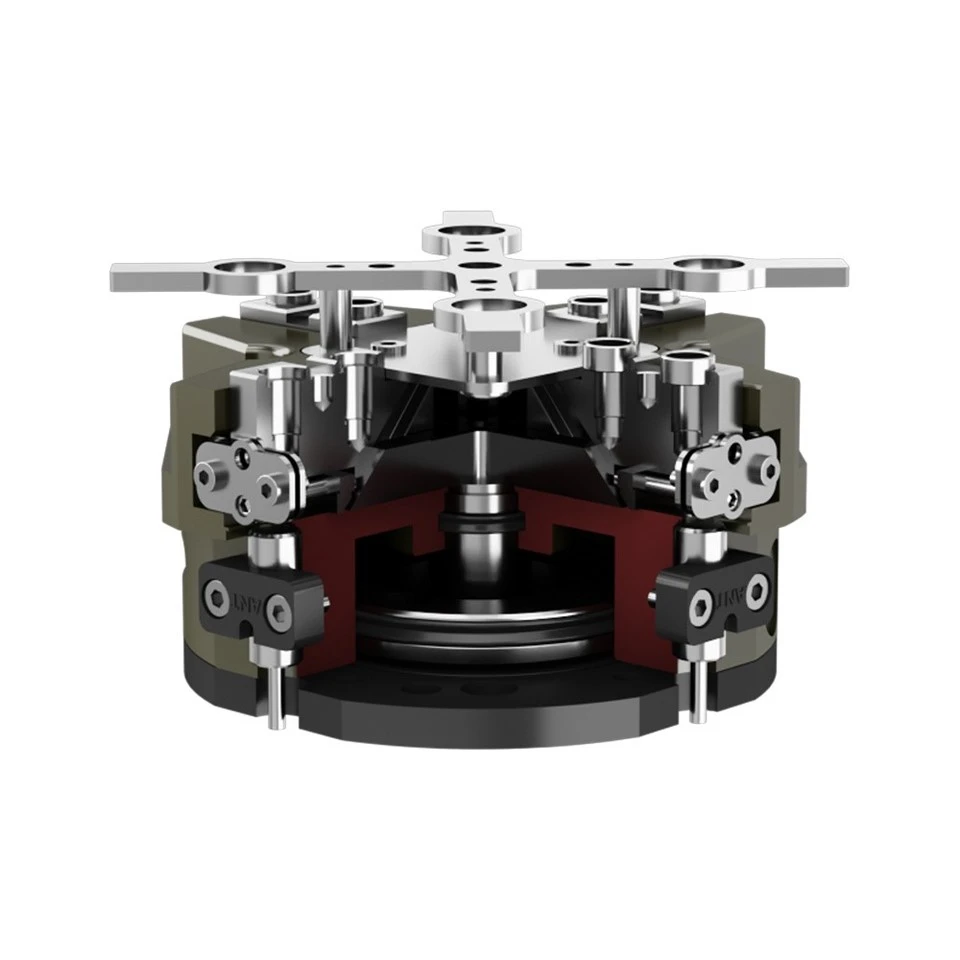
If you're in the market for a new robotic gripper, we've got a great range of options, including the 4 - jaw Concentric Gripper and the 4 - finger Concentric Gripper. We're always here to help you find the perfect gripper for your needs. If you have any questions or want to discuss your requirements, don't hesitate to reach out for a procurement discussion.

References
- Robotics Handbook: A Guide to Robotic Systems and Components
- Journal of Robotic Manipulation and Gripping Technology
- Manufacturer's Technical Documentation for Robotic Grippers


